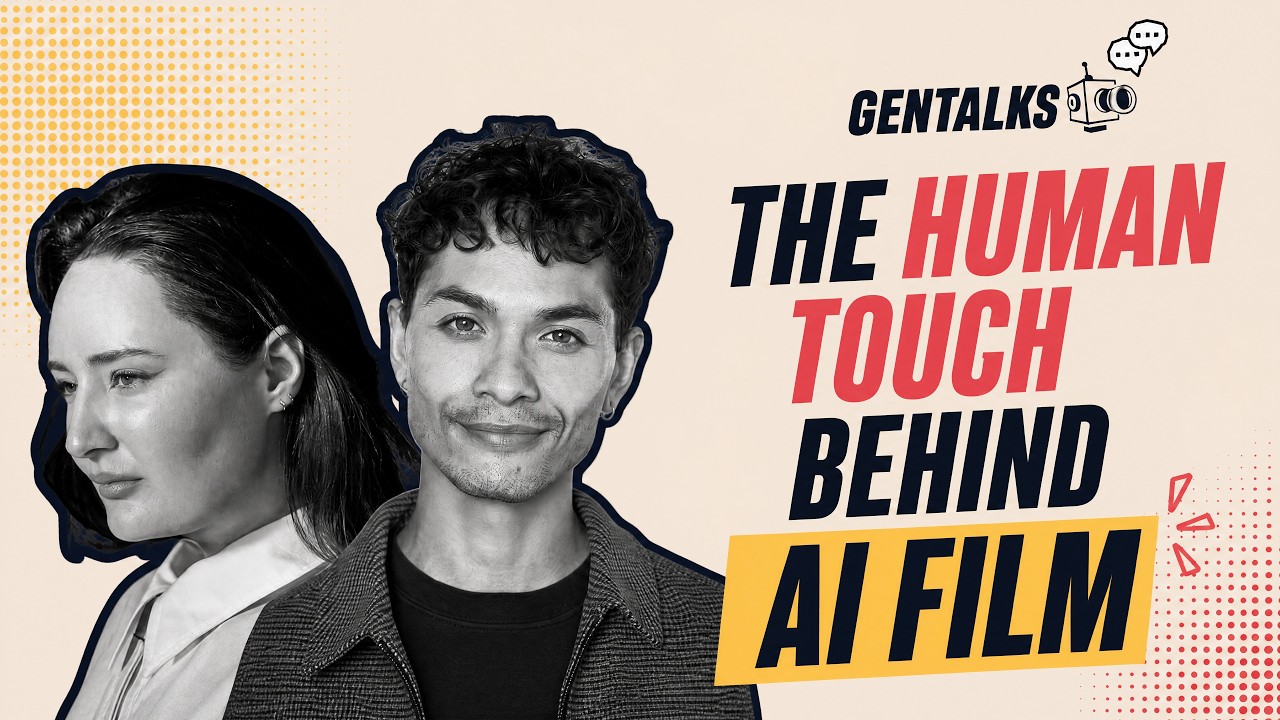
How do you make an AI film that actually has "soul"? In this session of GenTalks, we sit down with award-winning creators Alex Naghavi and Ezra Li to go behind the scenes of their groundbreaking short film, Le Drip. From "vibe coding" custom tools to re-generating every single shot at the 11th hour, this is a masterclass in professional AI filmmaking. What you’ll learn in this session: The Power of Vibe Coding: How Alex built custom parametric tools to control aesthetics (like stop-motion wiggle) that standard AI models can't achieve. Post-Prompting Workflow: Why the "fish in a sink" concept succeeded by moving beyond simple prompting and into intentional, human-led design. Tactile AI Aesthetics: Using classic art references (like Edvard Munch) to create a hand-painted look that avoids the typical "plastic" AI feel. Human-AI Collaboration: The role of professional Foley artists, manual color grading, and raw human voiceovers in elevating generative content. Featured Creators: Alex Naghavi: Executive Creative Director and Partner at Josephmark, specialist in design, tech, and "vibe coding." Ezra Li: Artist, actor, and director known for his Grand Prix-winning work and his focus on "Artists First, Tools Second." Timestamps 00:00 - Introduction & Machine Cinema check-in 02:30 - Meet Alex Naghavi: From design executive to AI filmmaker 09:40 - Alex’s earlier work: Depths, Gentle, and Railbound 12:10 - Meet Ezra Li: Why a Hollywood actor turned to AI for creative control 16:40 - Ezra’s work: Face Sisters and experimenting with performance 21:30 - FILM SCREENING: LRIP 26:30 - The Concept: A fish in a sink and existential mortality 30:20 - Visual Direction: Avoiding the "plastic" AI look 32:00 - What is Vibe Coding? Building custom creative tools 33:20 - Using Edvard Munch as a visual backbone for AI 35:10 - Prompt Engineering: Separating style, action, and constraints 38:30 - The Seance 2.0 Pivot: Redoing the entire film for better texture 40:00 - Raw Human VO vs. Generative Audio 43:00 - Professional Sound Design: The Foley sessions in Brussels 44:15 - Manual Color Grading for AI consistency 45:10 - Vibe Coding the end credits 49:00 - Audience Q&A: Humanizing the fish & the future of AI tools Links & Resources Mentioned: Google AI Studio: Alex’s preferred platform for rapid vibe coding. ElevenLabs: Used for transferring raw human VO into the French character voice. Runway: Used for storyboarding and shot consistency. #MachineCinema #AIFilmmaking #LRIP #VibeCoding #GenerativeAI #AlexNaghavi #EzraLi